


Hours after an angry mob in Kabul brutally murdered a 28-year-old Afghan woman named Farkhunda, her still-grieving family was forced to flee their home under the cover of night.
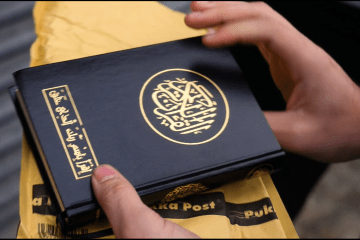
They knew the accusation that led to Farkhunda’s death — that she burned pages of the Quran inside a downtown Kabul shrine — was false, but there was little they could do Thursday in the hours after her she was beaten, run over by a Toyota hatchback, and burned in a patch of dirt in the Kabul River. Immediately after briefing them on the situation, security officials told the family to head to their homeland in Kapisa province, an hour north of Kabul.
It took nearly 24 hours for the truth to come out: Farkhunda, her older brother Najibullah told VICE News, “devoted her life to Islam,” and bore no resemblance to someone who would enter one of Kabul’s holiest shrines and burn pages of the sacred text she held in such high esteem
“How could a student of religion do such a thing?” asked Najibullah, an engineer, from his family’s home in Kabul.
According to her family, Farkhunda left the school of mathematics at Kabul’s Education University, enrolled in a madrasa (a school for theology), and eventually applied to the school of Islamic studies at Kabul University. While awaiting the start of her studies, Farkhunda taught 30 students to read and recite the Quran.
In the 48 hours since her death, investigations by Afghan security officials and the Ministry of Hajj and Religious Affairs found that the papers Farkhunda was accused of burning were actually Persian-language tawiz charms, written by the mullah of the shrine in Dari — not the Quran.
“I personally followed the case but I didn’t find any evidence that this woman burned the Holy Quran,” Daiul Haq Abid, deputy minister of Hajj and Religious Affairs, told local media. “The burned papers were pieces of a Persian book.”
Her family insists Farkhunda — who for years had been suffering from an unspecified mental illness — burned no papers at all that day.
“At the shrine, she told women inside to end these practices of lighting candles, asking for charms and tying ribbons,” her father, Mohamad Nadar, told VICE News.
Farkhunda’s family said her request angered the mosque’s mullah, who collected donations of money and goods in exchange for the charms.
“The mullah burned the tawiz himself,” her father claimed.
The mullah was taken in for questioning by police.
Though many Afghans decried the gruesome killing, others praised the 1,000 young men who had gathered to watch Farkhunda’s body burn in one of the busiest commercial and religious landmarks of the Afghan capital.
The morning after the violence, a cleric at the Wazir Akbar Khan Mosque in Kabul said during Friday prayers that the mob had a right to defend Islam.
“I am warning the government not to arrest those who did this, because it will mean an uprising,” the cleric said in a sermon broadcast on a loudspeaker, according to Reuters.
Farkhunda’s family said reports that she discouraged visitors to the Shah-Do Shamshira shrine of engaging in “un-Islamic excesses” seem more in line with her character, recalling a recent funeral where she encouraged relatives to pray — rather than weep — for the deceased.
Though subsequent investigations have seemingly cleared her of the charge of burning the Quran, Farkhunda’s family said the case has still not been given the respect it deserves. When they went to the morgue, they allegedly found the charred remains of their daughter lying in a corner instead of the cold storage units.
Source
The Author



1 Comment
Thanks for clarifying this story brother…May Allah Forgive her and her parents.