

In the autobiography of Malcolm X, in chapter seventeen, he discussed some of his experiences when he travelled to Makkah to perform Hajj. The passage highlights certain roles and functions a prayer rug could have.
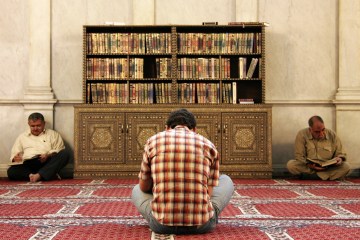
Although prayer rugs possess no religious significance in and of themselves, there were some interesting parallels between the potential functions of a prayer rug and the functions of a masjid two things primarily viewed and thought of as places of prayer.
The following is what he said:
I began to see what an important role the rug played in the overall cultural life of the Muslims. Each individual had a small prayer rug, and each man and wife, or large group, had a larger communal rug. These Muslims prayed on their rugs there in the compartment. Then they spread a tablecloth over the rug and ate, so the rug became the dining room. Removing the dishes and cloth, they sat on the rug – a living room. Then they curl up and sleep on the rug – a bedroom. In that compartment, before I was to leave it, it dawned on me for the first time why the fence had paid such a high price for Oriental rugs when I had been a burglar in Boston. It was because so much intricate care was taken to weave fine rugs in countries where rugs were so culturally versatile. Later, in Mecca, I would see yet another use of the rug. When any kind of dispute arose, someone who was respected highly and who was not involved would sit on a rug with the disputers around him, which made the rug a courtroom. In other instances it was a classroom.