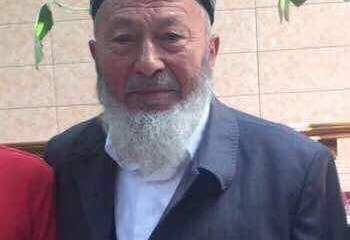


Midway through Ramadan, Muslims in Uganda were shaken when news started filtering in about the killing of Sheikh Hasan Kirya in the capital city, Kampala.
He became the 3rd Muslim scholar to be killed in six months – taking the toll to 12 of murdered Sheikhs – after he was gunned down by unknown assailants riding a motor cycle.
Muslim community leaders have been executed in the same style where they are trailed by motor cycles known as boda boda before they are killed.
In December last year, Sheikh Mustafa Bahiga, the Kampala District Amir of the Jamu-i-yyat Dawah Al-Salafiyyat was gunned down, at Bwebajja Mosque on Entebbe Road where he was going for esha prayers.
His death ignited finger-pointing. His family members were accusing several colleagues whom they claimed had a hand in slaying the 54-year-old.
Muslim leaders have decried the increased rate of targeted murders and lack of conclusive investigations by police in last three years.
The Secretary General of Uganda Muslim Supreme Council Al Hajji Muhammad Kisambira told the media after the slaying of Sheikh Kirya he was not satisfied with the Police’s efforts.
“The last time the Inspector General of Police Kale Kaihura came here he said it was members of the Allied Democratic Forces that are behind these killings, but we have not seen anyone linked to the ADF brought before Court,” he said questioning why all those arrested haven’t been brought before the courts.
“Even those they arrested are yet to be taken before a High Court for trial with sufficient evidence, only then shall we as Muslims know that the Police is working.
“Justice delayed is justice denied, this has left us as Muslims even more scared,” he told the media.
Several arrests been made
The police chief Kayihura told Muslims at the funeral of Sheikh Kirya that the suspects in the previous assassinations of sheikhs could have sponsored Kirya’s murder.
About 20 suspects were arrested and charged with terrorism, murder and crimes against humanity.
According to a report in New Vision, Kayihura hinted that the suspects confessed being involved in the killings, but they are innocent until proven guilty by the courts of law.
He told the gathering that the late Sheikh was working with the police to bring into book criminals behind the killings.
“I am also a person and I am not here to make promises,” Kayihura was quoted during Sheikh Kirya’s funeral prayers.
“Kirya was killed because of me. He was killed for working with me and we have that intelligence.”
Kayihura said he had intelligence that he is also a target of Kirya’s killers.
“They wanted to kill me first. But they said if they don’t get me, they will get someone whose death will hurt me so much,” he explained.
But who’s behind the merciless murders?
It is a question that has been asked million times, but there hasn’t been a straight answer.
A Muslim journalist based in Uganda, Ahmed Wetaka told Cii News that there’s no clear indications on who is behind the murders.
“It’s difficult to tell who is behind those murders because of various challenges around the Muslim community,” he said.
He said these challenges are a result of fractures within the Muslim leadership which has resulted in multiple factions.
“Overtime there has been accusations and counter accusations from members of either group. The differences result from leadership wrangles and management of property,” said Wetaka.
The late Sheikh Kirya was the spokesperson of Kibuli Muslim faction that was in loggerheads with the mainstream Muslim leadership based in Old Kampala over the dubious sale of Muslim properties.
The Kibuli faction refused to be led by Mufti of Uganda Sheikh Shaban Ramadhan Mubajje who they blamed for the sale of the properties.
In early June this Mufti Mubajje was quoted by the Vision newspaper accusing top security officers hatching the plans to kill Muslim scholars.
He said that a series of recent killings of Muslim clerics is a planned campaign to cause hatred among Muslims in Uganda.
Without mentioning names, he said there is a group of people who want to destabilize the Muslims.
He said what started as “a joke” has turned into something very serious.
“It is unfortunate that we have lost over five sheikhs. It started as a joke but it has reached the extreme. We should be careful and objective as Muslims. Muslim critics are using top security officers to execute their plan in the company of fellow Muslims,” he was quoted.
The outspoken mufti is on the record calling the Kibuli Muslim group as “sounding tins” that do not bother him at all.
Some quarters within the Muslim community are convinced that the killings are planned hit from rival factions, a view the Uganda Muslim Supreme Council public relations officer Haji Nsereko Mutumba denies.
“It is a mistake to attribute these killings to William Street Property/Mosque or misunderstandings/divisions among Muslim leaders. If this was the case, then the killings should have started way back in the early 1900s because that is when Muslim leadership wrangles started,” he argued saying Muslims should be united.
“Following the murder of Sheikh Hassan Kirya, I witnessed certain Muslim clerics busy accusing and threatening fellow Muslims. By doing this, they were behaving exactly the way the killer wants them to do that is blaming each other and going after one another as the killing goes on.”
He said the killer has a motive of sparking internal conflict among Muslims in Uganda.
‘Blame the rebels’
The Ugandan authorities have however repeatedly blamed the murder of Muslim clerics on remnants of the Allied Democratic Front-ADF under the directives of their leader Sheikh Jamil Mukulu.
Mukulu is currently battling his extradition from Tanzania to face trial in Uganda over the murders.
Despite Haji Mutumba’s denial and government indications that DRC based ADF rebels are behind killings, some reports give credence to Muslims killing their own.
This can be attributed to former Muslims who were part of a rebellion that carried it activities from the government.
In a document in the possession of Cii News, the slain clerics Bahiga, Kirya, Sheikhs Yunus Kamoga and Abdul Karim Ssentamu were involved in rebellion against government, they were never part of ADF.
They were rebels attached to Juma Oris’s rebel group, based in Sudan.
ADF operated in DRC under the command of Jamil Mukulu and had not relationship whatsoever with the Oris’ group.
According to the document, when government closed in on their group, the top leaders decided to denounce rebellion and signed on some terms with government.
“These included amongst others integrating some of them in government security agencies like the UPDF and resettlement of others. It is under this arrangement that people like Hassan Kirya, Major Kigundu, Ssentamu and Mustafa Bahiga started working with government.
“Both Museveni and Kale Kayihura, the police chief separately told this to the mourners. He says when money started flowing in, their superiors abandoned them and went on to live a posh lifestyle,” reads the document.
When they signed a pact with the government to end their rebellion which they had termed jihad, huge packages were given which resulted in the leadership living lavish lifestyles.
“They bought nice cars, built mansion and got anything money could buy, while their juniors were wallowing in poverty, yet the money was meant for all of them. Many of them decided to let it go since they have been recruited on the basis of fighting for Islam, but when they discovered it was false they decided to keep quiet.
“However, some of the fellow fighters felt aggrieved especially those who lost their loved ones in the war. It is these they believe are out to avenge on this superiors,” read the part of the document.
Despite this information coming out it is still unclear if the reasons cited in the documents are the real causes of the killings according to the list that has been doing rounds among the Muslim clerics in Uganda.
Some of the Sheiks who were gunned down were not on that list. People like Haji Kiwewa, Hajji Ssebagala, the former security officer of UMSC and Sheikh Rashid Wafula.
Source